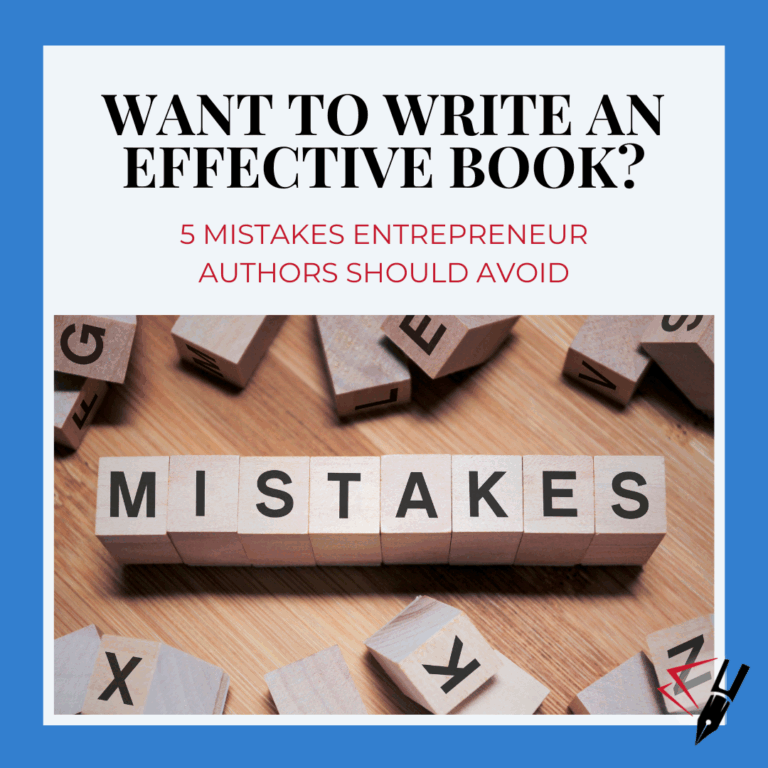
When you’re writing a book on your own, it’s easy to make mistakes that keep it from reaching its full potential and growing your business. Of course, a developmental editor can usually catch and correct these kinds of issues before your book makes it to publishing, but wouldn’t you rather avoid them from the beginning and save yourself the extra time?
There are really five major missteps I see entrepreneur authors make when writing their books. Let’s break them down so you can steer clear of them.
Mistake #1: Teaching Everything You Know in One Book
This is the number one mistake I see, especially with first-time entrepreneur authors. You’ve spent years building your expertise, and you want to pack all of it into your book. Every framework, every lesson learned, every piece of advice—it all goes in.
The problem? This approach creates a massive, overwhelming tome of a book that readers struggle to finish.
When you try to help everyone with everything, you end up helping no one particularly well. Your book becomes a reference manual instead of a focused guide, and readers don’t walk away with clear, actionable steps.
Here’s what to do instead: Narrow your focus. Pick one specific problem your target audience faces and solve that problem thoroughly. You can always write another book later. In fact, holding back some of your expertise creates opportunities for additional books, courses, or consulting work down the line.
Think of your book as the entry point to your expertise, not the final word on it.
Mistake #2: Writing for Mass Appeal
I get it: You want your book to reach as many people as possible. The bigger the audience, the better, right? Not really.
When you write for “all entrepreneurs” or “anyone interested in leadership,” your message gets diluted. You end up writing in generalities because you’re trying not to alienate anyone. This creates a book that feels generic, and readers can’t see themselves in it.
The more specific you are, the more your book will resonate with the right people. When someone picks up your book and thinks, “This was written for me,” that’s when the magic happens. That’s when they keep reading, recommend it to others, and ultimately reach out to work with you.
Instead of casting a wide net, think about the exact person you want to help. What industry are they in? What stage of business are they at? What specific problem keeps them up at night? Write directly to that person, and your book will have far more impact.

Mistake #3: Trying to Sell Your Services on Every Page
Your book is a business tool, so naturally, you want it to generate leads and clients. But if your book sounds like a sales pitch, readers will put it down.
I’ve seen books where every chapter ends with something like: “At XYZ Company, we can help you customize this for your business.” I’ve even seen books where the author holds back useful information and tells readers to enter into one of their paid programs to get it. To readers, this feels manipulative, and it almost always backfires.
Your book should provide real value. Give your readers actionable insights they can implement on their own. Show them what’s possible. Demonstrate your expertise through the quality of your content, not through constant self-promotion.
When you do this well, the book becomes the sales pitch. Readers finish it thinking, “I want to keep learning as much as I can from this person.” That’s when they follow you, consume more of your content, and eventually convert into a customer.
You can absolutely include calls to action—a resource page, mentions of your services, an invitation to connect—but these should feel natural, not pushy, and they should be used sparingly.
The best business books lead readers to the author’s services by showcasing expertise, not by begging for business.
Mistake #4: Ignoring Your Unique Voice and Experience
In an effort to sound “professional” or “authoritative,” some entrepreneur authors strip all the personality out of their writing. They write in a formal, distant tone that doesn’t sound like them at all.
No matter how technically sound the book is, this will make it completely forgettable to readers.
Your readers want to hear from you—the real you. They want your stories, your perspectives, your unique take on the topic. That’s what makes your book different from everyone else’s.
You can establish credibility and authority while still being yourself. Share the mistakes you made and what you learned from them. Talk about the moment you had a breakthrough that changed your approach. Use language that feels natural to you, not like you’re trying to impress a college professor.
Your voice is part of your brand. Don’t lose it in your book.
Mistake #5: Skipping the Strategic Foundation
Some entrepreneur authors jump straight into writing without doing the strategic work first. They have a vague idea of what they want to say, so they start writing and hope it all comes together.
This rarely works.
Without a clear strategy, your book lacks direction. You might repeat yourself across chapters, drift off-topic, or struggle to create a cohesive narrative. And when you finally finish, you may realize the book doesn’t actually accomplish what you wanted it to.
Before you write a single word, answer these questions:
- Why am I writing this book? What do I want it to accomplish for my business?
- Who exactly am I writing for? Who is my ideal reader?
- What makes my approach unique? Why should someone read my book instead of the dozens of others on this topic?
- What specific problem will this book solve, and how will I structure it to guide readers through the solution?
Your answers to these questions will shape every decision you make as you write, from what content to include to how you organize your chapters. Strategy comes first, then writing.
Writing a Book That Works for Your Business
These mistakes are common, but avoidable. When you approach your book strategically—focusing on a specific audience, providing real value, and staying true to your voice—you create something that genuinely supports your business goals.
At Aha! Editorial, we help entrepreneur authors avoid these pitfalls from the very beginning. Our full-service packages include strategy sessions to ensure your book is positioned for success before you even start writing. Book a free call to talk through your book idea and how we can help you bring it to life.

Owner of Aha! Editorial