
Most entrepreneur authors approach their books like this: They brainstorm everything they know about their topic and then start writing.
The result is usually a book with decent content but no connective thread. Readers finish it thinking, “That was helpful,” but they can’t quite remember what made it different from the other business books on their shelf.
Framework-driven books work differently. Instead of covering a collection of related topics, they’re built around a specific methodology—your signature system for solving your target audience’s problem.
Readers forget lists of tips, but they remember systems with clear steps. That’s the difference between a topic-driven book and a framework-driven one.
What Makes a Book Framework-Driven?
A framework-driven book organizes your entire book around a repeatable process that becomes associated with you.
Think about books like Start With Why by Simon Sinek. The entire book is built around the Golden Circle framework—Why, How, What—and shows how starting with “why” transforms leadership and organizations. Or Profit First by Mike Michalowicz: The whole book walks you through his five-step system for transforming your business finances, with each section building on the previous one.
When readers finish one of these books, they remember the system, and they can explain it to others.
Why This Matters for Your Business
Your book is a business asset, and a framework-driven approach makes it a much more effective one.
When your book is built around a signature methodology, it positions you as having a proprietary approach. Instead of being just another business coach or consultant, you’re the expert who teaches the SCALE Method, or the Five Pillars, or whatever your system is called.
This makes you easier to market, easier to remember, and easier to refer to. It also opens up opportunities beyond the book: workshops based on your framework, certification programs, courses. Your methodology becomes the foundation for multiple offerings.
You Probably Already Have a Framework
If you’ve been working with clients for a while, you likely already have a methodology—you just haven’t formalized it yet.
Think about how you work with clients. Do you always start with the same step? Is there a sequence you follow that consistently gets results? Do you find yourself explaining the same process over and over?
That’s your framework. It just needs structure and a name.
For example, maybe you always start by helping clients clarify their goals, then audit their current situation, then create a plan, and then implement it in phases. That’s a four-step framework right there. You just need to give it a memorable name and build your book around it.
What Makes a Framework Memorable
The best frameworks are easy to remember and distinctly yours. Here’s what makes them stick:
Naming conventions that work: Acronyms like GROW or SMART. Numbered steps like “The 7 Habits” or “5 Dysfunctions.” Alliteration like “The Four Cs.” Visual metaphors like “The Flywheel” or “The Funnel.”
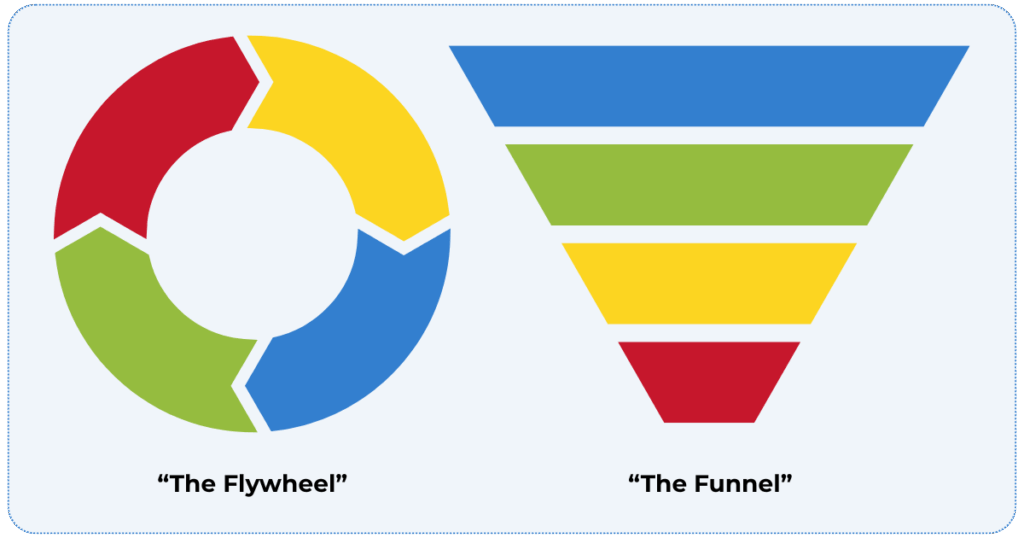
Simplicity: Keep it to three to seven steps. Any more than that and people likely won’t remember it. If your process has 12 steps, group them into larger phases.
Clear sequence: Each step should naturally lead to the next. Readers should understand why the order matters.
Specificity: It needs to be distinct enough that people associate it with you, but not so generic that it could apply to anyone.
How to Structure Your Book Around Your Framework
Once you have your framework, structuring your book becomes straightforward.
Your introduction explains the problem your framework solves and gives an overview of the system.
Then each major section or part of your book focuses on one step of your framework. Within each part, you’ll have two to four chapters that break down that step in detail.
Your conclusion ties it all together and shows readers how to implement the full framework.
What this looks like in practice:
Let’s say you’re a business consultant who helps service-based businesses scale. You’ve noticed you always take clients through the same five phases, so you create the “SCALE Method”:
- Simplify Your Offer
- Clarify Your Message
- Automate Your Systems
- Leverage Your Team
- Expand Your Reach
Your book structure becomes:
- Introduction: Why Service Businesses Struggle to Scale
- Part 1: Simplify Your Offer (2-4 chapters)
- Part 2: Clarify Your Message (2-4 chapters)
- Part 3: Automate Your Systems (2-4 chapters)
- Part 4: Leverage Your Team (2-4 chapters)
- Part 5: Expand Your Reach (2-4 chapters)
- Conclusion: Putting SCALE Into Action
Notice how this structure stands out compared to only having generic chapter titles like “Chapter 3: Marketing Strategies” or “Chapter 7: Hiring Your First Employee.” Every single part of the book explicitly builds on your framework, and readers know exactly where they are in the process.
Common Mistakes to Avoid
The biggest mistake is forcing a framework that doesn’t actually exist in your work. If you don’t have a repeatable process, don’t manufacture one just to have a catchy acronym. Readers will see through it.
Another mistake is making your framework too complicated. If readers can’t remember it, it’s not doing its job.
And finally, some authors create a framework but don’t actually structure their book around it. They mention their “Five Pillars” in the introduction and then never use the term again. That defeats the purpose. If you have a framework, commit to it. Make it the backbone of your entire book.
Beyond the Book
When you write a framework-driven book, it opens doors for other offerings. Your proprietary method could become a workshop. A certification program. A course. A keynote presentation. It becomes a foundational component for your entire business.
Your framework creates a common language between you and everyone you work with. It shapes how you talk about your work, how you explain your approach to potential clients, and how you train your team.
When someone asks what you do, you don’t say, “I’m a business consultant.” You say, “I help service businesses scale using my SCALE Method.” That’s instantly more impactful and memorable.
Start With Your Process
If you’re planning to write a book, start by looking at your process. What steps do you take clients through? What actions get them results? That’s your framework. At Aha! Editorial, we help entrepreneur authors create books with maximum impact. If you’re ready to turn your methodology into a book that builds your business, book a free strategy call to get started.

Owner of Aha! Editorial