For busy entrepreneurs, writing a book often feels like an impossible dream squeezed between client calls, staff meetings, and handling the daily fires that inevitably pop up.
But here’s a hard truth: There will never be a perfect time to write your book. Your business will always need you. There will always be one more meeting, one more emergency, one more strategic decision to make.
If you really want to write a book, you have to stop waiting for free time to magically appear. What you need is a realistic plan.
Let’s talk about what it takes to write a book and how to fit it into your already-packed schedule.
How Long Does It Take To Write a Book?
Before you can make time for your book, you need to understand what you’re committing to. Most business books are around 50,000 words, and the average person can write about 300 words in 30 minutes when they’re focused. Here’s what that looks like in practice:
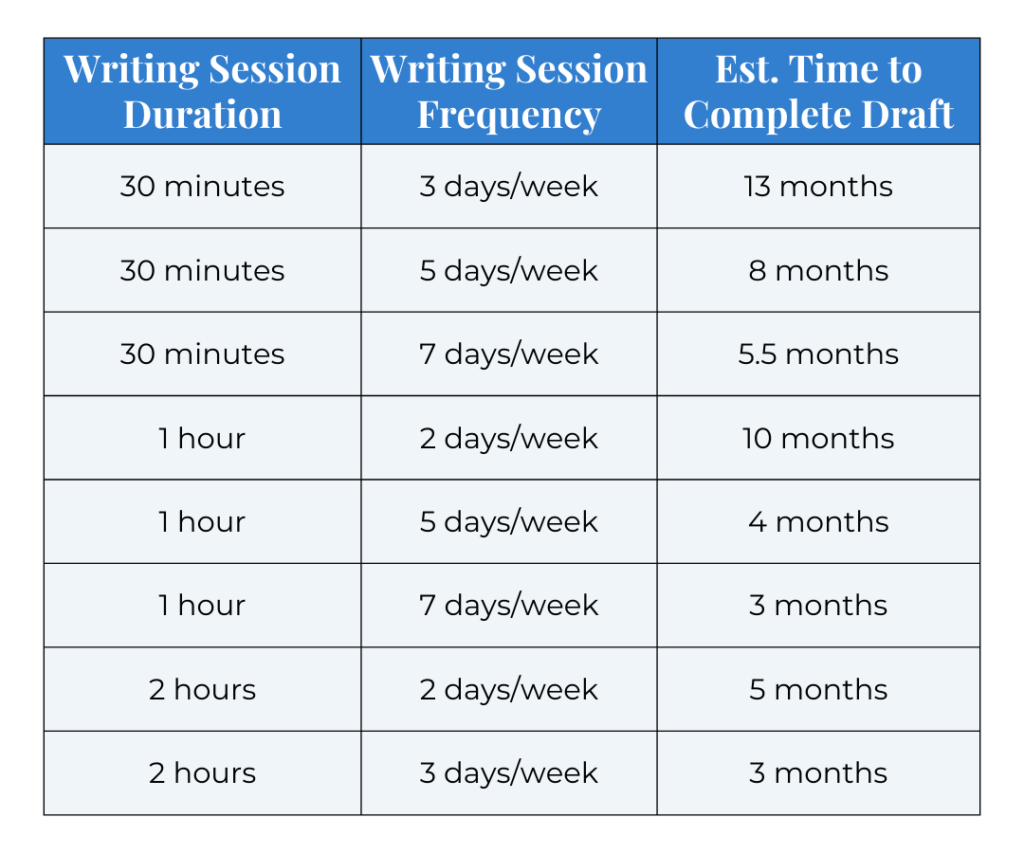
Keep in mind that these estimates are for writing your first draft and do not include editing, layout, or anything else your book will need before publication. For an overview of the full book-creation process, check out this blog.
Finding Time To Write Your Book
As a business owner, you likely feel you’re too busy to write a book. To find time to write, ask yourself these three questions:
1. What am I currently doing that I could delegate, eliminate, or reduce?
Reflect on the last week. How much time did you spend on tasks that someone else could handle? How many meetings could have been emails? Where are you spending time on low-value activities out of habit rather than necessity?
2. What’s the minimum viable writing commitment I can sustain?
Look at the table I included earlier and consider what kind of writing routine you can realistically commit to. If you need to start with just 30 minutes a few days per week, that’s fine. It’s better to commit to something small and stick with it than to commit to writing daily and quit after two weeks.
3. What time of day do I actually have energy to write?
If you’re not a morning person, don’t force yourself to write at 6 a.m. Don’t schedule writing for 9 p.m. if you’re typically mentally drained by then. Identify a pocket of time when your brain works at its best. Maybe that’s immediately after your workout or after you drop the kids off at school.
Tips for a Successful Writing Routine
Here are some tips to make your writing routine work.
Make Writing Non-Negotiable
Treat your writing time like a meeting with your most important client. You wouldn’t cancel that meeting because you got a bunch of emails, would you?
Block the time in your calendar: Here’s a link to your Google Calendar; I challenge you to go ahead and schedule your first writing session there now. Tell your team you’re unavailable during that window. Turn off notifications. Close Slack. Let calls go to voicemail.
The entrepreneurs who finish their books are the ones who protect their writing time the same way they protect their revenue-generating activities. Remember, ultimately, your book is a business tool.
Capture Ideas as You Go
Your book doesn’t only get written during dedicated writing sessions. Some of your best content will come from the work you’re already doing.
Keep a running note in your phone for book ideas. When you’re explaining something to an employee, think: “Could this go in my book?” When you solve a problem for a client, record a quick voice memo about how you did it. When you’re reviewing your numbers and notice a pattern, jot down a note about what it reveals.
Writing your book and running your business go hand in hand: Your business is the research for your book.
Start Small and Build a Habit
Many new authors try to write for an hour every day. That sounds great in theory, but it rarely happens in practice.
I recommend starting with 30-minute writing sessions two or three times a week. Once that becomes a habit, try adding more 30-minute sessions to your schedule or extending sessions by 15 to 30 minutes.
The goal is to build a sustainable practice that actually gets your book done. Ready to finally write your book? Let’s talk about creating a realistic writing plan that fits your schedule. Schedule a free consultation to discuss your book goals.

Owner of Aha! Editorial